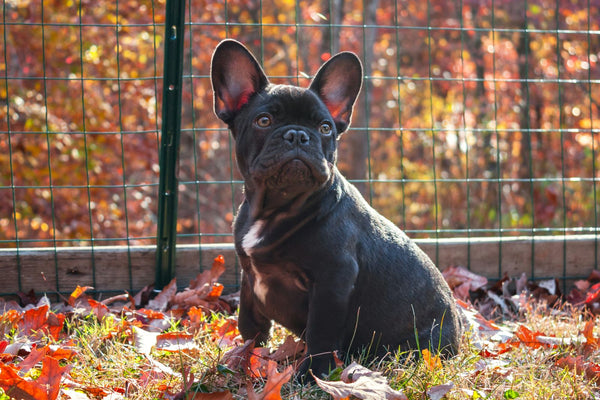
Red light therapy may offer a golden retriever general comfort support as they age, but it can't change the shape of a hip joint, there is no research built around golden retrievers specifically, and this breed comes with one precaution that's easy to overlook: lumps. This guide is written for golden owners, so we've skipped the general explainers (our guides to hip dysplasia, arthritis and senior dogs cover those in full) and focused on what's different about goldens and how to think about each stage of their life.
Why Goldens Get Singled Out for Joint Problems
Golden retrievers are one of the breeds most often discussed in connection with hip dysplasia, and elbow dysplasia is well recognized in the breed too. How common is it? That depends on who you ask, and how they counted. Paster et al. (2005) estimated that roughly 53% to 73% of the goldens they assessed showed radiographic signs of hip dysplasia, and argued that lower figures from voluntary screening registries are biased, because owners are more likely to submit films from dogs whose hips look normal.[1] Swiss screening data point the other way: the share of dysplastic goldens fell from about 25% to about 9% between the late 1990s and 2010–2016. Only a minority of dogs were radiographed, though, and the authors cautioned that this can't be read as the true rate across the breed.[2]
The honest takeaway is that no single percentage settles it. What's consistent is that dysplasia is a real, well-documented risk in the breed, and that X-ray findings and day-to-day comfort don't always line up. That's why your vet's assessment of your individual dog matters more than any statistic. For a full explanation of what hip dysplasia is and what red light therapy can and can't do about it, see our owner's guide to hip dysplasia.
What the Research Says (and Doesn't) for Goldens
To our knowledge, no photobiomodulation trial has been built around golden retrievers specifically. What exists comes from studies of dogs more broadly, and much of it uses clinical-grade lasers rather than home LED devices. We've covered those studies in our guides to arthritis and hip dysplasia, so we won't repeat them here.
The short version: the evidence is more developed for clinic-based laser protocols than for home devices, and as far as we know there's no reason to expect goldens to respond very differently from other large dogs. Without breed-specific data, though, that's an assumption rather than a finding.
A Golden Retriever Life-Stage Guide
Young Adults (1–4 Years): Usually Not Yet a Joint-Device Question
Most goldens at this stage don't need a joint-focused routine. If your dog shows signs of hip or elbow trouble this young (limping after play, "bunny hopping," reluctance to rise), that's a reason for a veterinary exam and imaging, not a home device. For an active young golden, post-exercise support is the more relevant use; see our post-exercise guide.
Puppies and dogs under a year old deserve extra caution. Veterinary guidance advises care over the long bones of animals under one year, mainly in relation to higher-powered devices, so check with your vet before using any light therapy on a growing dog.[3]
Midlife (5–7 Years): The Quiet Changes
This is the stage where joint changes are easiest to miss: a little slower to rise, a pause before jumping into the car, a shorter appetite for fetch, stiffness after a big day. None of these is a diagnosis, and they overlap with the early signs described in our arthritis guide. The most useful step here is usually a conversation with your vet at the next check-up. If your vet is comfortable with it, a gentle daily wellness routine can start around this stage.
Seniors (8+ Years): Daily Support and Regular Check-Ups
For older goldens, a short daily routine is where red light therapy tends to fit best. Our senior dog guide covers the everyday signs and how to build the routine. This is also the stage where regular veterinary check-ups matter most for goldens: in a necropsy study of goldens at a US teaching hospital, the odds of a cancer-related death rose with age.[4] That isn't a reason for alarm, but it is a reason to keep your vet in the loop on anything new, which brings us to the one breed-specific precaution.
One Breed-Specific Precaution: Lumps and Bumps
Cancer is one of the best-known health concerns in goldens. In the necropsy study above, roughly two-thirds of the goldens had died of cancer. That was a referral-hospital population, so the figure may not reflect all goldens, but it shows how common the disease is in the breed.[4] Veterinary guidance on photomedicine (laser and LED therapy) advises avoiding areas of neoplasia, lists lymphoma and immunosuppressant medication as contraindications, and acknowledges open questions about whether laser therapy can stimulate tumor growth, and at what settings.[3] In practice, that comes down to a few simple rules:
- Have any new or changing lump checked by your vet before using light or massage over it.
- If your dog has a cancer history or takes immunosuppressant medication, ask your vet (or oncologist) before starting any home light therapy.
- Sudden weakness, pale gums, a swollen belly or collapse call for an emergency vet visit, not a session.
None of this means a golden can't have a wellness routine, only that your vet should be part of it. Our general safety guide covers the other precautions.
Golden Coat and Lifestyle Practicalities
- Thick double coat. Brush out loose undercoat, especially during seasonal shedding, so the device sits close to the skin. We cover how light behaves through fur in our guide to red light therapy and pet coats.
- Love of water. After a swim, dry the coat thoroughly, and check your device's manual before using it around moisture.
- Hot spots. If your golden is prone to them, keep the device away from open or weeping skin. See our skin conditions guide.
- Settling in. Goldens are typically people-oriented and eager to please, which tends to help. Pair sessions with a calm routine and a chew or treat; our tips on getting your dog to stay still apply here too.
Where PawMoves Restore Fits In
The PawMoves Restore Red Light & Massage Wrap for Pets is a general wellness device: 660nm and 850nm light across 444 emitters, three adjustable intensity levels, an independent vibration massage function (six modes, 19 intensity levels) and a 30-minute auto-shutoff. The wrap format lets you cover the hips and lower back in a single placement, the areas most relevant to hip support. Check the sizing guide on the product page against your dog's measurements.
It isn't a treatment for hip or elbow dysplasia, and it isn't something to use over a lump or in place of veterinary care. If your golden has a diagnosis or a history of cancer, ask your vet whether and how a wellness routine fits.
Frequently Asked Questions
Can red light therapy help a golden retriever with hip dysplasia?
It may offer general comfort support alongside veterinary care, but it can't change the structure of the joint, and no trial has tested it in goldens specifically. Our hip dysplasia guide explains what it can and can't do.
When should I start using it with my golden?
For adult dogs with no health concerns, it's a general wellness choice, usually discussed with your vet around midlife or later. For puppies, growing dogs, or any dog with a suspected or confirmed diagnosis, talk to your vet first.
Is it safe if my golden has a lump or a history of cancer?
Ask your vet before using it. Veterinary guidance advises avoiding areas of neoplasia and lists lymphoma and immunosuppressant medication as contraindications, so a lump or cancer history is a "vet first" situation.
Can I use it after a swim, or on a hot spot?
Dry the coat thoroughly first and check your device's manual regarding moisture. Don't use it over open or weeping hot spots; those need a vet's assessment.
Do goldens need red light therapy more than other breeds?
No. There's no breed-specific evidence, so whether it suits your dog depends on the individual dog's age, health, and your vet's advice, not the breed.
Related Reading
- Red Light Therapy for Dog Hip Dysplasia: An Owner's Practical Guide
- Red Light Therapy for Dogs with Arthritis: What Pet Owners Need to Know
- Red Light Therapy for Senior Dogs: Daily Support for Older Dogs
- Is Red Light Therapy Safe for Pets? What Pet Owners Need to Know
- Does Red Light Therapy Penetrate Through Pet Fur? The Science Explained
- Red Light Therapy for Dog Skin Conditions: Hot Spots, Pododermatitis & More
References
- Paster ER, LaFond E, Biery DN, Iriye A, Gregor TP, Shofer FS, Smith GK. Estimates of prevalence of hip dysplasia in Golden Retrievers and Rottweilers and the influence of bias on published prevalence figures. J Am Vet Med Assoc. 2005 Feb 1;226(3):387–392. PMID: 15702688. https://pubmed.ncbi.nlm.nih.gov/15702688/
- Ohlerth S, Geiser B, Flückiger M, Geissbühler U. Prevalence of canine hip dysplasia in Switzerland between 1995 and 2016—a retrospective study in 5 common large breeds. Front Vet Sci. 2019 Oct 24;6:378. PMID: 31709271. https://pubmed.ncbi.nlm.nih.gov/31709271/
- Robinson NG. Photomedicine in veterinary patients (laser therapy, light-emitting diode therapy). In: Merck Veterinary Manual (professional version). Merck & Co., Inc.; full review Sept 2022, last updated Oct 2025. https://www.merckvetmanual.com/therapeutics/integrative-complementary-and-alternative-veterinary-medicine/photomedicine-in-veterinary-patients
- Kent MS, Burton JH, Dank G, Bannasch DL, Rebhun RB. Association of cancer-related mortality, age and gonadectomy in golden retriever dogs at a veterinary academic center (1989–2016). PLoS One. 2018 Feb 6;13(2):e0192578. PMID: 29408871. https://pubmed.ncbi.nlm.nih.gov/29408871/