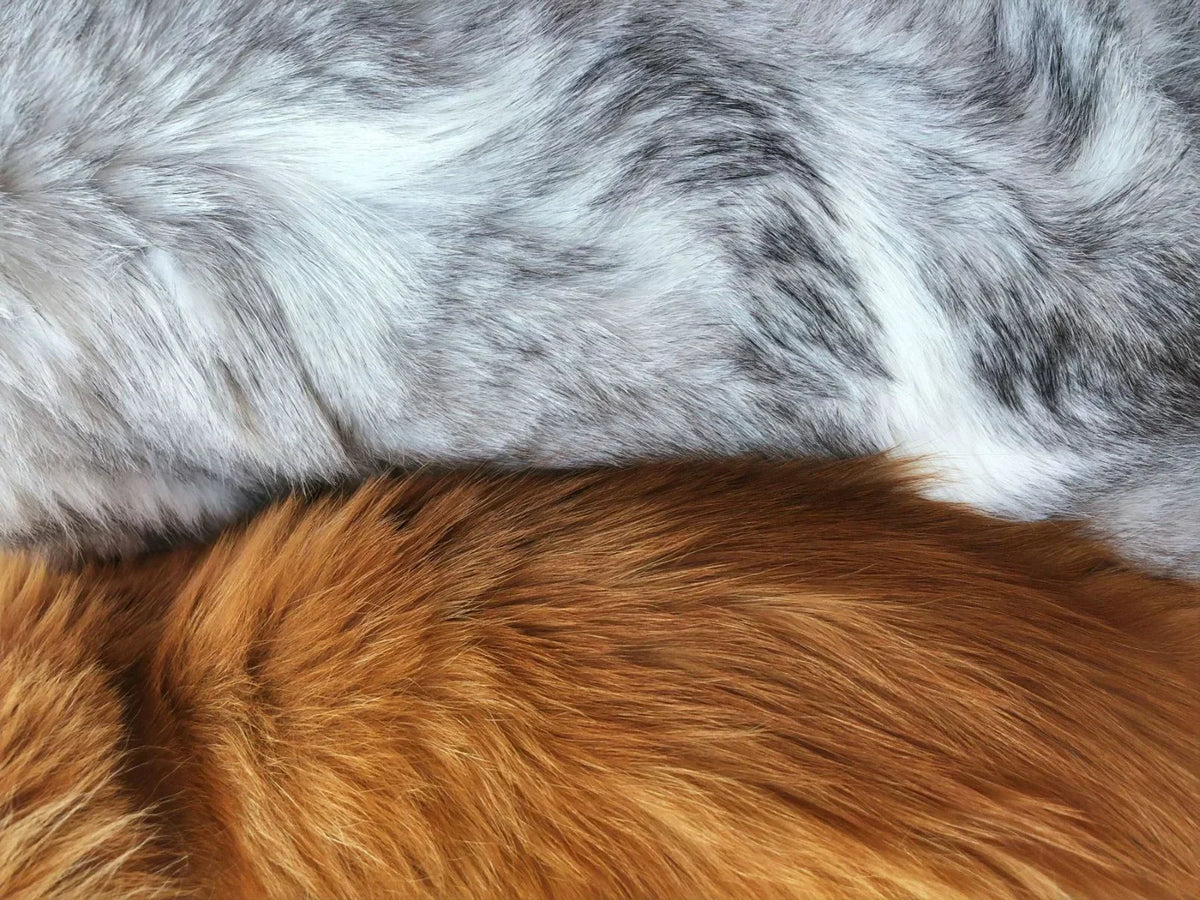
Yes, red light therapy penetrates through pet fur. But how much light actually reaches the skin — and the tissue beneath it — depends on three specific variables. Understanding these variables is the difference between a session that delivers consistent photon energy to the target tissue and one that falls short without the owner realising it.
This is one of the most commonly asked questions about at-home PBM, and one of the least thoroughly answered. Most guides offer a reassuring "yes" without addressing what affects penetration or what to do about it. This article covers the science directly.
What "Penetration" Actually Means in PBM
When a red light therapy device is used on a pet, photons travel from the light source through the coat, through the skin, and into the underlying tissue — where they are absorbed by Cytochrome c Oxidase, a photoreceptor within the mitochondria. As Chung et al. (2012) describe, it is this absorption that triggers the photochemical cascade at the centre of PBM's mechanism: supporting ATP production, modulating reactive oxygen species, and influencing cellular signalling — all without generating heat.[1]
Two things happen to photons before they reach that target:
Absorption: Certain molecules — particularly melanin, the pigment responsible for coat and skin colour — absorb photons directly, converting their energy to heat before they can reach deeper tissue. The more melanin present, the more photons are absorbed at the surface.
Scattering: Physical structures within the coat — individual hairs, follicles, and the varying angles of hair growth — deflect photons in different directions. Scattered photons may still reach the skin, but at reduced density and consistency compared to unscattered light.
Both of these effects reduce the number of photons arriving at the target tissue. The question is not whether they occur — they do in every case — but how significant the reduction is, and what determines that.
How 660nm and 850nm Behave Differently Through Fur
The two wavelengths used in dual-band PBM devices behave differently when passing through coat material, and this difference is practically relevant for pet owners.
660nm (visible red) sits at a shorter wavelength within the optical window. Melanin absorbs light more strongly at shorter wavelengths, which means 660nm is more affected by dark pigmentation than 850nm. In dense or darkly pigmented coats, a meaningful proportion of 660nm photons may be absorbed before reaching the skin surface.
850nm (near-infrared) has a longer wavelength, which means it scatters less through coat material and is less efficiently absorbed by melanin. It also penetrates deeper into the tissue once it passes the skin surface — reaching 5–10mm into muscle and connective tissue compared to the 5–6mm depth of 660nm. For pets with thick or dark coats, 850nm delivers more reliable photon transmission to the underlying tissue.
This is one practical reason why dual-wavelength devices — delivering both simultaneously — are better suited to the range of coat types found across dogs and cats than single-wavelength devices. For a full breakdown of what each wavelength does at the tissue level, see: 660nm vs 850nm: What These Two Wavelengths Actually Do for Your Pet
The Three Variables That Determine How Much Light Reaches the Skin
1. Coat Colour
Coat colour is the most significant and best-documented variable in veterinary PBM research. Hochman-Elam et al. (2020) assessed photon transmission in 47 dogs across black, brown, and white coats using two commercially available veterinary lasers at multiple wavelengths. The findings were clear and quantifiable: darker coat pigmentation significantly reduced light transmission to the underlying tissue, with black-coated dogs showing the lowest transmission rates across all tested wavelengths.[2]
The mechanism is straightforward: melanin is a broadband absorber of light, and darker pigmentation means more melanin present in the hair shaft. More melanin at the surface means more photons absorbed before reaching the skin — less available to drive the cellular response PBM depends on.
Practical implication: Owners of dark-coated pets should consider using a higher intensity setting or extending session length slightly to compensate for surface absorption. The 850nm wavelength is the more reliable of the two for deep-tissue delivery through dark coats.
2. Coat Density and Length
Beyond colour, the physical structure of the coat introduces scatter. Hochman-Elam et al. (2020) also found that unshaved areas showed significantly reduced photon transmission compared to shaved skin in the same dogs — a finding consistent across coat types.[2] The denser and longer the coat, the more surfaces are available to deflect photons before they reach the skin.
This plays out differently across coat types:
- Single-layer coats (Greyhound, Dachshund, many domestic shorthair cats) present less scatter than double-layer coats of equivalent colour
- Dense double-layer coats (Husky, Golden Retriever, Maine Coon) have the combined effect of greater density and often significant undercoat — both of which increase scatter
- Long, fine coats (Maltese, Yorkshire Terrier, Ragdoll cat) add scatter through path length — photons travel further through coat material before reaching the skin even if the coat is not particularly dense
Practical implication: For dogs with dense double coats, gently parting the fur at the treatment area before securing the device, or using an intensity setting higher than you would for a short-coated dog of the same colour, compensates for the additional scatter.
3. Device Contact Distance
This variable is frequently overlooked but has a significant practical impact. Light intensity follows the inverse square law: double the distance between a light source and a surface, and the intensity at that surface drops to one quarter. In practical terms, a device held 5cm away from a pet's coat delivers far less photon density to the skin surface than one held flush against the coat.
For handheld devices that project light across a gap, this means the actual photon delivery to the skin varies continuously as the device is moved or the pet shifts position. For contact-format devices — mats and wraps held directly against the body — the gap is effectively zero, and photon delivery is consistent throughout the session regardless of the pet's minor movements.
This is one of the more meaningful practical distinctions between device formats in a pet-specific context. For a full discussion of how device format affects penetration and daily use, see: Can I Use a Human Red Light Therapy Device on My Pet?
Should You Shave Your Pet Before Sessions?
Shaving the treatment area before a PBM session is standard practice in professional veterinary laser settings — and the Hochman-Elam research confirms why: shaved skin shows significantly higher photon transmission than unshaved skin of the same colour.[2]
For home-use daily wellness routines, shaving is not practical or necessary. The difference is context:
In a clinical setting, where a veterinarian is targeting a specific area with a high-powered laser for a defined number of sessions, shaving maximises precision and efficiency. The effort is justified by the targeted, short-term nature of the treatment.
In a daily home wellness routine, where sessions happen several times per week over months, shaving is neither sustainable nor necessary. The adjustments available at home — intensity level, session length, device positioning, and wavelength selection — are sufficient to account for coat variables without the ongoing management of shaving.
What does help at home:
- Part the fur at the target area before securing the device, particularly for dense double coats
- Use a contact-format device that sits flush against the body rather than projecting light across a gap
- Increase intensity by one level for dark or dense-coated pets compared to your baseline setting
- Prioritise 850nm delivery for deep-tissue support in dark-coated pets, where 660nm surface penetration is most affected
Breed and Coat Type: A Practical Reference
|
Coat Type |
Example Breeds |
Primary Challenge |
Practical Adjustment |
|
Short, fine, single layer |
Greyhound, Dachshund, Domestic Shorthair cat |
Minimal barrier — best-case penetration |
Standard settings; no adjustment needed |
|
Short, dense double layer |
Labrador, Corgi, Beagle |
Density scatter despite short length |
Hold device flush against coat; mid-high intensity |
|
Dense double layer, medium-long |
Golden Retriever, Husky, Siberian cat |
Highest scatter; significant undercoat |
Part fur before securing; higher intensity setting |
|
Long, fine single layer |
Maltese, Yorkshire Terrier, Ragdoll cat |
Path length increases scatter |
Part fur or use contact device; mid intensity |
|
Dark or black pigmentation |
Black Labrador, black cat |
Melanin absorption most significant |
Rely on 850nm; extend session length slightly |
|
Hairless |
Sphynx cat, Chinese Crested dog |
No coat barrier |
Lowest intensity setting; build gradually |
Frequently Asked Questions
Does dark fur get warm during red light therapy sessions?
At home-use power densities, PBM devices are non-thermal — they do not produce meaningful heat in tissue. While melanin in dark fur does absorb some photons at the surface, the energy involved at home-use intensities is not sufficient to produce noticeable warmth. If a device is generating heat that the pet can feel, the power density is above the home-use wellness range.
Does wet fur affect penetration?
Yes, somewhat. Water absorbs light at certain wavelengths and can alter scatter patterns within the coat. For practical purposes, sessions are best conducted when the coat is dry. Avoid using PBM devices on pets that have been recently bathed or are damp from outdoor activity.
Should I groom my dog before a session?
A freshly brushed coat — free of mats and tangles — presents less irregular scatter than an uncombed one, particularly for longer-coated breeds. Regular grooming is good practice generally, and it does modestly improve the consistency of photon delivery during sessions.
Is coat colour a reason to choose one wavelength over another?
For dark-coated pets, the 850nm near-infrared wavelength is more reliable for deep-tissue delivery because it is less affected by melanin absorption than 660nm. A dual-wavelength device delivers both, which covers the full depth range regardless of coat colour — and is the most practical choice for general wellness use across pets with different coat types.
My dog has a very thick double coat. Is red light therapy still worth using?
Yes. Even with a dense double coat, meaningful photon delivery reaches the skin with appropriate adjustments to intensity and positioning. The 850nm wavelength in particular penetrates through dense coats more reliably than 660nm. The Hochman-Elam research found reduced transmission in unshaved dense coats — but reduced is not zero, and the adjustments available at home are sufficient for a consistent daily wellness routine.
Related Reading
- Red Light Therapy for Pets: A Complete Guide to PBM and At-Home Wellness
- 660nm vs 850nm: What These Two Wavelengths Actually Do for Your Pet
- Can I Use a Human Red Light Therapy Device on My Pet?
- Red Light Therapy for Cats at Home: A Step-by-Step Starter Guide
- How to Choose a Red Light Therapy Device for Your Pet
References
- Chung H, Dai T, Sharma SK, et al. The nuts and bolts of low-level laser (light) therapy. Ann Biomed Eng. 2012 Feb;40(2):516–533. PMID: 22045511. https://pubmed.ncbi.nlm.nih.gov/22045511/
- Hochman-Elam LN, Heidel RE, Shmalberg JW. Effects of laser power, wavelength, coat length, and coat color on tissue penetration using photobiomodulation in healthy dogs. Can J Vet Res. 2020;84(2):131–137. PMID: 32255908. https://pubmed.ncbi.nlm.nih.gov/32255908/